




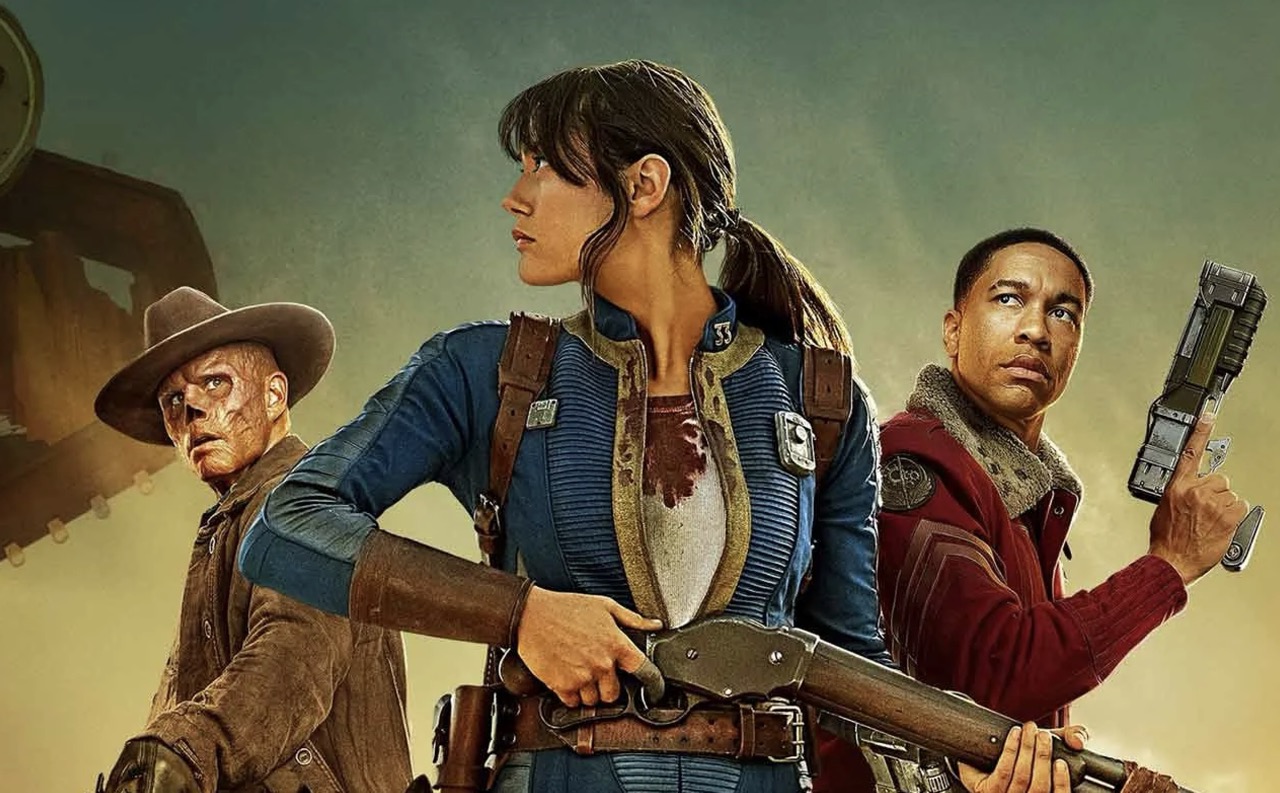
Season 2 of Fallout doubles down on the wasteland’s chaos, expanding its brutal factions, dark humour, and moral grey zones as survivors chase power, truth, and a future in a world that refuses to stay buried.
Following the success of its first season, season 2 of Fallout arrives with high expectations. Adapting the tone, humour, and emotional storytelling of a long-running video game franchise into television is never simple, but the series continues to demonstrate a strong understanding of the world it is adapting. The iconic genre and vibe of the franchise’s comedy, brutality, and retro-futuristic styling is alive and well (even though everything else has been nuked).
As with the first series, we heavily focus on Lucy and her journey to track down her father. This second chapter pushes deeper into the wasteland expanding the lore and delivering a character-driven narrative that feels both larger in scope and more intimate with each character. The story picks up directly after the events of the first season, dealing with the consequences or the “fallout,” (yes pun intended) left at the end of the season. Power vacuums widen, alliances fracture, and the mere idea of safety (whether underground or above) continues to erode. This time, the wasteland feels less like a backdrop and more like a living ecosystem. Various factions and groups compete for influence, survival, and control. Over what is left.
It does a great job of making sure people don’t simply represent good or evil, Black or white, but everyone is some shade of grey. The pacing is more deliberate this time around. While season 1 often relied on surprise and shock value, season 2 invests more heavily in slow building tension. Some viewers may find the middle stretch slightly uneven, but (coming from a fan of the games) the payoff in the final episodes justifies the patient build-up. The final confrontations feel earned and with weight rather than cliché addons.
The central trio continues to anchor the series. Ella Purnell returns as Lucy, whose vault-raised optimism is tested far more severely this season. What once felt like naïve hope gradually evolves into cautious resolve and Ella Purnell portrays this shift very well whilst credibly building on the character of “Lucy”. Walton Goggins once again steals many scenes as the Ghoul. Even though his morally flexible code made up most of his identity in season 1, he receives some of the most compelling back story this season. His story presents more authentic and grounded as a family man searching for his lost loved ones. Meanwhile Aaron Moten continues to develop Maximus as a person trying to find out who he is on the inside and where he fits in. He makes several “grey” choices but keeps trying to do better in a world that doesn’t want to give him a single break.
Season 2 also introduces several new characters namely, a calculating faction leader, a pre-war genius and multiple friends and foes rise from different directions, and each has their moment or moments to shine. What makes this work is that the cast interactions and relationships feel real and fleshed out. Arguments don’t feel like info dumps, they feel like genuine clashes between people who desperately want to be right in a world that has already given up.
Visually, season 2 is simply beautiful. The show doubles down on its retro futuristic aesthetic while expanding its environments. Where season 1 often relied on vault interiors and desolate wasteland, alongside one or two settlements. The wasteland feels more varied this time. Sun-bleached deserts give way to decaying urban ruins and eerie, irradiated forests. The camera highlights more of the environmental details like corroded signs, withered infrastructure, and remnants of pre-war capitalism frozen in time. Action sequences are shot with clarity rather than chaos. The camera rarely succumbs to shaky-cam excess, allowing viewers to track geography and consequence. Violence, while still being very graphic, is used deliberately.
Season 2 of Fallout is a incredibly solid continuation of its first season. It deepens its characters, enriches its world, and refines its visual qualities on a plot reinforced by the lore. It has a heavy element of fan service making sure to include scenes, characters and music from the games whilst making it believable and not feeling like it was shoe horned in. The cast again delivers great performances that emphasise the material and the direction that has managed to pull all these parts together demonstrates growing confidence in video game adaptations for TV and Film.
It may not reach the same level of surprise as the first season, but Fallout season 2 remains an engaging and confident continuation of the wasteland saga.

Author: Mike, Web After Sales