



A Beginner’s Guide To Enjoying Vinyl At Home: Turntables, Speakers & More
There is a unique thrill in the world of vinyl that digital streaming just can’t replicate. From the physical feel of a gatefold sleeve to that unmistakable moment the needle finds the groove, it’s an experience that brings you closer to the music you love.
If you’re looking to experience better sound and a more tactile way to enjoy your favourite artists, you’re in the right place. This guide will walk you through everything you need to know to get started, from which Hi-Fi equipment to choose to caring for your growing collection.
Understanding the Record Turntable Parts
Before you start spinning, it helps to know the key features of a record player. Every component is a feat of engineering designed to help you experience better audio quality by reducing interference and maximising detail. Here are the essential record turntable parts to understand.
The Platter
This is the circular plate where your record sits. High-quality platters are often made from dense materials such as aluminium, acrylic, or even glass. The extra mass helps create a flywheel effect, ensuring the record spins at a perfectly constant speed – usually 33⅓ RPM for albums or 45 RPM for singles. A stable platter is crucial for keeping the pitch of your music spot-on.
The Tonearm
The tonearm is the balanced, pivoting arm that guides the cartridge across the record. Its job is to move with almost zero friction while maintaining the perfect amount of downward pressure (tracking force). Many of our expert-level decks use carbon fibre or high-grade alloys to keep the arm stiff but lightweight, allowing it to track the grooves accurately without adding its own vibration to the sound.
To keep everything perfectly balanced, you will also notice a feature called anti-skating. As a spinning record naturally wants to pull the tonearm toward the centre, anti-skating applies a gentle reverse force. This prevents the needle from ‘skating’ across the grooves, ensuring an even sound from both speakers and protecting your records from uneven wear.
The Cartridge and Stylus
Often simply called the needle, this is the most delicate and vital part of the signal chain. The stylus is usually a tiny industrial diamond that physically ‘reads’ the microscopic ridges in the vinyl. This movement is then converted into an electrical signal by the cartridge.
When you are looking at different decks, you will generally come across two types of cartridges:
- Moving Magnet (MM): Found on most entry-level and mid-range turntables, these are fantastic all-rounders. A key benefit for beginners is that the stylus can usually be replaced easily on its own if it becomes worn or damaged.
- Moving Coil (MC): Typically found on high-end decks, these offer an even more refined and detailed sound. However, they are precision-sealed units, meaning the stylus cannot be replaced individually. Once it has reached the end of its life, the entire cartridge usually needs to be sent off to be professionally rebuilt.
Upgrading your cartridge is one of the most effective ways to reveal hidden layers of detail in your favourite recordings, and our team is always happy to help you find the right match for your system.
The Plinth
The plinth is the main body or base of the turntable. In the world of Hi-Fi, vibration is the enemy. A well-engineered plinth is designed to be rigid and stable, often using dampened materials to soak up unwanted energy from the motor or the floor. This solid foundation ensures that the only thing the needle picks up is the music itself.
If you’re looking for the best foundation for your collection, take a look at our guide to the best turntables to enjoy your vinyl collection.
The Drive System
You will usually come across two types: Belt Drive and Direct Drive.
- Belt Drive uses a rubber belt to spin the platter, which helps isolate the record from motor noise – perfect for a pure listening experience.
- Direct Drive connects the motor directly to the platter or via an electromagnetic system (Technics), offering incredibly consistent speeds and quick start times, which is why they are the go-to for DJs and broadcast professionals.
How to Operate a Turntable
Operating a deck is a rewarding process that encourages you to listen to an album from start to finish, just as the artist intended. It is a physical connection to the music that requires a touch of finesse to get the best results.
The Placement
Carefully slide your record onto the centre spindle. You want it to sit perfectly flat against the platter or the record mat. If you want better stability and reduced resonance, many enthusiasts use a record weight or clamp. This presses the vinyl firmly against the platter, helping the stylus track the grooves with even greater precision.
The Speed
Check your record label for the correct playback speed. Most 12-inch albums are Long Players (33⅓ RPM), while 7-inch singles and some high-fidelity audiophile pressings run at 45 RPM. Ensure your speed selector is set correctly; playing a record at the wrong speed won’t damage it, but the artist will certainly sound a little bit different!<
The Drop
This is where precision matters most. Rather than moving the tonearm by hand, use the cueing lever.
- Lift the lever to raise the arm.
- Move the headshell until the stylus is suspended directly over the “lead-in” groove (the shiny outer edge of the record).
- Slowly lower the lever. The hydraulic damping in the arm will let the needle settle into the groove gently, protecting both your delicate stylus and your precious vinyl from accidental scratches.
The Return
When the needle reaches the run-out groove at the centre of the record, it’s time to lift. Use the cueing lever once more to raise the arm before moving it back to its rest and securing the arm clip.
Expert Tip: If you prefer a more hands-off experience, some “fully automatic” turntables will handle the dropping and returning of the arm for you at the touch of a button, while “semi-automatic” decks will simply lift the arm and stop the motor when the record ends.
How To Connect A Turntable To Speakers
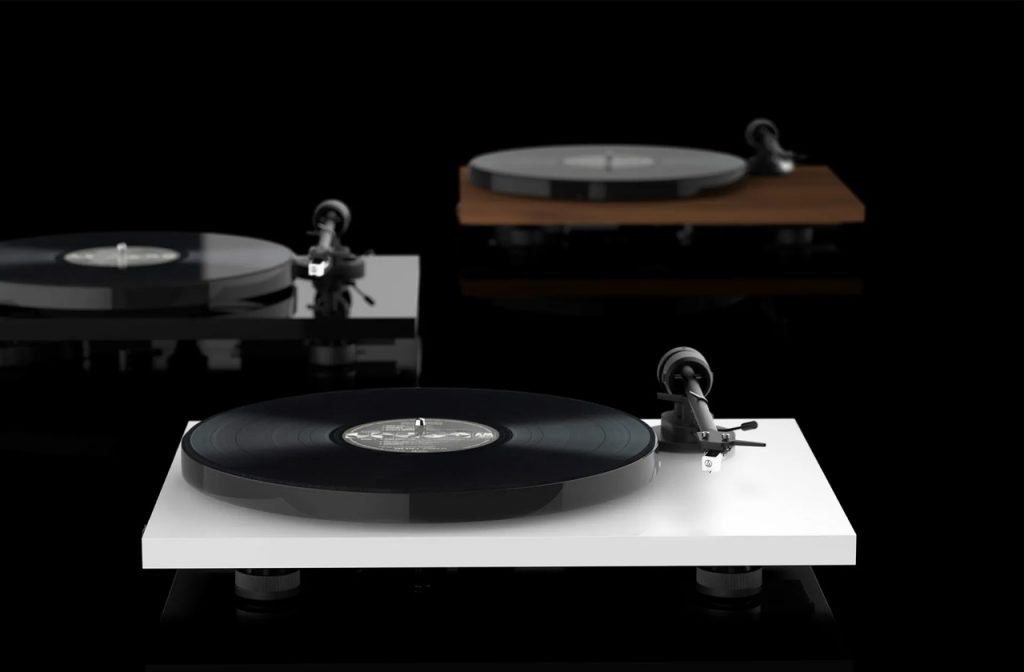
Once you have your kit, you’ll need to invest in speakers for your turntable. Some beginner-friendly decks have built-in ‘phono stages’, which means they can plug directly into any set of powered (active) speakers. Others might require a separate phono pre-amp to boost the tiny signal from the needle into something a traditional Hi-Fi amplifier and passive speakers can play.
Learning how to connect a turntable to speakers is straightforward once you identify whether you have a built-in pre-amp. We usually recommend using high-quality RCA cables for a secure, analogue connection. When you’re ready to play, learning how to operate a turntable is all about a steady hand. You simply place the record on the platter, select the correct speed (usually 33 RPM for albums), and use the cueing lever to gently lower the tonearm onto the outer edge of the disc.
Caring For Your Collection
Vinyl is a tactile medium, which means it needs a little bit of love to keep sounding its best. Proper care ensures your records – and your equipment – last for years to come.
Keeping It Clean
Dust is the enemy of great sound. Use a carbon fibre anti-static brush before and after every play to sweep away surface debris. This doesn’t just make the music sound clearer; it also protects your stylus from unnecessary wear. It’s also essential to clean your stylus after several plays.
How to Replace a Turntable Needle
Eventually, even the best stylus will wear down. If your music starts to sound fuzzy or loses its crispness, it is likely time for a replacement. Moving Magnet (MM) cartridges allow you to slide the old stylus off and click a new one on. If you are ever unsure, pop into your local store – our colleagues are always happy to help you find the right match and even show you how to fit it.
Building Your Collection
Building a library of your favourite music is one of the most rewarding parts of the hobby. It transforms your music from a digital file into a physical gallery of art and sound that you can hold in your hands.
When you are looking for a Hi-Fi turntable setup, remember that your environment is just as important as the deck you play on. Having a dedicated space for your growing collection not only keeps your home organised but also makes the process of choosing an album feel even more special. Investing in a dedicated furniture piece, such as the Fitueyes Eiffel Record Player Stand, is a simple way to keep your setup looking smart and your favourite pressings within easy reach.
Start Your Vinyl Journey with Richer Sounds
From excellent entry-level decks to high-performance setups, we have everything you need to get the very best from your records. Explore our full range of turntables online or visit us in-store for expert guidance tailored to your home and budget.