



There’s something fitting about revisiting V for Vendetta in 2026. Some films age into nostalgia; others age into warning signs. This one, unsettlingly, has done the latter.
I still remember seeing V for Vendetta in cinemas back in 2005. At the time, my expectations were shaped almost entirely by the Wachowskis’ previous work, namely The Matrix trilogy. Those films (the first of which being my favourite film ever) had redefined action cinema with their groundbreaking visuals and philosophical undertones, so naturally I walked into this one expecting something stylistically similar. But while the Wachowskis wrote and produced V for Vendetta, the directing duties fell to James McTeigue, marking a notable shift in tone and execution and the difference was immediately apparent.
Where The Matrix was sleek, kinetic, and heavily stylised in a cyber-punk sense, V for Vendetta felt more grounded, almost theatrical at times, yet no less deliberate in its presentation. McTeigue seems to lean into atmosphere over spectacle, crafting a version of Britain that feels both exaggerated and eerily plausible, especially here and overseas. Even back then, it carried a certain weight, but watching it now, that weight feels heavier.
The story unfolds in a dystopian United Kingdom under a fascist regime, where fear is weaponised and dissent is crushed. At the centre is V, a masked vigilante whose motivations straddle the line between personal vengeance and ideological revolution. Opposite him is Evey Hammond, played by Natalie Portman, who becomes both witness and participant in V’s mission.
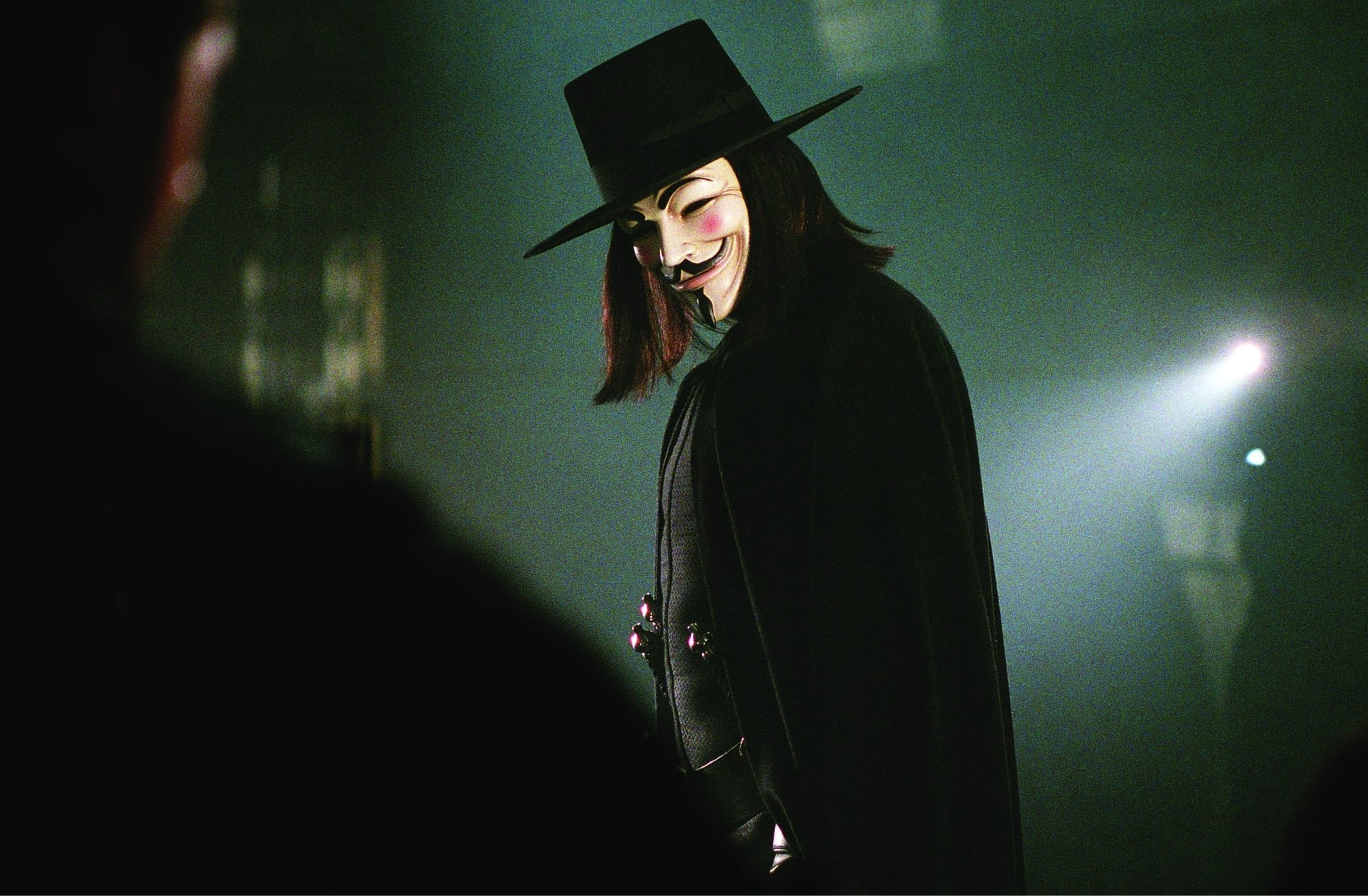
Hugo Weaving stepped into the role of V after the original actor, James Purefoy, departed early in production, and now it’s difficult to imagine anyone else embodying the character so completely. Despite never seeing his face, Weaving delivers a performance that is rich, expressive, and oddly human. His voice alone carries the weight of the film, measured, poetic, and occasionally unhinged in a way that keeps you guessing.
The film’s style deserves equal praise. There’s a deliberate theatricality to it… long monologues, carefully composed frames, and a rhythm that sometimes feels closer to stage drama than traditional blockbuster pacing/blocking. Everything’s just a little, ‘heightened’. The use of symbolism, particularly the Guy Fawkes mask, has transcended the film itself, becoming a real-world icon of protest and resistance. That’s not something many films can claim. Fun fact: Guy Fawkes was actually from my hometown of York… okay, back on with the review.
Adapted from Alan Moore’s graphic novel, the screenplay walks a tightrope between political commentary and character-driven storytelling. It doesn’t always land perfectly, but its willingness to engage with themes of authoritarianism, propaganda, and personal freedom is what gives it staying power. Which brings me to why this revisit felt so timely.
It’s impossible to ignore the parallels between the world of V for Vendetta and the current political climate, particularly in the United States and the UK. The film’s depiction of fear-driven governance, media manipulation, and the gradual erosion of civil liberties doesn’t feel like distant fiction anymore. The rise of far-right ideologies and increasingly authoritarian rhetoric in parts of the world gives the film a renewed urgency. What once felt like speculative fiction now feels uncomfortably close to reality.
It’s not just a story about rebellion, it’s a reminder of how fragile democratic systems can be when fear becomes a governing tool. This revisit was actually sparked by something more mundane: I recently picked up the 4K Blu-ray release of the film. As someone who owned the original 1080p Blu-ray, I wasn’t sure how much of an upgrade to expect. The answer, as it turns out, is quite a lot.
The 4K transfer brings a noticeable improvement in detail and clarity. The film’s darker scenes (of which there are many) benefit significantly from the expanded contrast range, with deeper blacks and more nuanced shadow detail. Textures, particularly in costumes and set design, come through with greater precision, adding an extra layer of immersion. The colour grading feels more balanced as well, avoiding the slightly washed-out look of the older 1080p Blu-ray.
Audio-wise, the upgraded Dolby Atmos mix provides a more dynamic soundscape. Dialogue remains crisp (crucial for a film so reliant on monologues), while the score and ambient effects have more presence and depth. It’s not a flashy audio experience, but it’s a refined one that suits the film’s tone.
V for Vendetta is one of those films that grows louder with time. Its message hasn’t softened; if anything, it’s sharpened. And while it may not have the immediate cultural impact of the Wachowskis’ earlier work, its legacy feels more enduring in a different, more unsettling way. If you haven’t seen it in a while, or at all, now might be the right time to put on the mask and listen closely. Some ideas, after all… are bulletproof.

Author: Arron, Marketing Department