



The first Star Wars theatrical release in 7 years, this John Favreau-directed film attempts to reinvigorate Star Wars magic for the big screen.
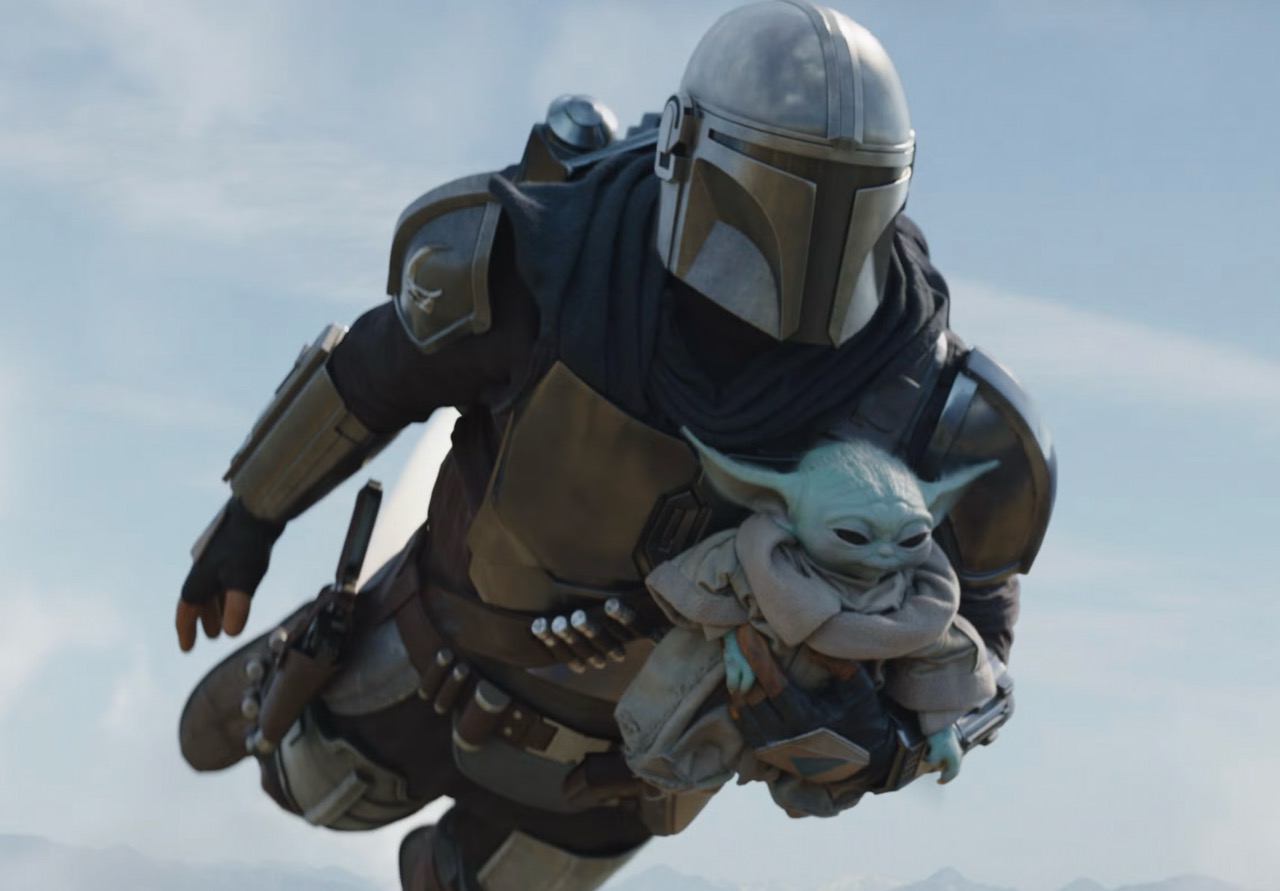
I’m a decently big fan of The Mandalorian TV show – upon release in 2019, it really scratched an itch for Star Wars fans wanting to see some more Mandalorian action, after the promise of the short-lived Boba Fett. It was a serialised sci-fi western with original trilogy charm. Its titular character – Din Djarin, referred to as simply ‘The Mandalorian’ – was played by the effortlessly cool Pedro Pascal and a team of stunt actors. However, the biggest star of the show was Grogu, or affectionately known by audiences as ‘baby Yoda’. The same species as the iconic Yoda, Grogu, a force-sensitive youngling, was brought to life as a Jim Henson-style puppet in the show as a baby-talking, force-wielding icon. Whilst his cuteness and likeness to Yoda are a huge part of his appeal, the way he allowed for paternal growth from the previously cold Din Djarin, and connected to larger Star Wars lore, elevated the show to greatness.
For a while, anyway. In my opinion, the show experienced a somewhat steep drop in quality once it hit its 3rd season. When the film was announced, I did have some hope that the characters and plot could be elevated to a more cinematic and cathartic level. The same team that developed the show returns – on Favreau as director, writer, and producer, Dave Filoni as writer and producer, and Ludwig Göransson as composer.
The result, for me, was unfortunately not more than the sum of its parts. The plot echoes the type of adventure that the show would navigate – The Mandalorian and Grogu take on a new mission in a post-Empire galaxy that aims to snuff out the remnants of the evil order, deal with space gangsters and get into all sorts of exciting kerfuffles. This time, Republic general Colonel Ward (Sigourney Weaver) puts them to the task of finding Jabba the Hutt’s lost son, Rotta (Jeremy Allen White), on the instruction of The Twins, villainous cousins of Jabba.
Din Djarin felt zapped of personality and mystique in this film. I have loved seeing this hardened vigilante-type rogue become softened by Grogu’s influence, and the show often balanced this while still showcasing his coolness. Here, he’s neither that paternal nor cool; he’s just kind of there. He’s still involved in some decently exciting action, but this does very little to characterise him for a feature-length affair. Rotta the Hutt is a vaguely inspired character. The last time he was featured in Star Wars content was the 2008 Clone Wars animated film as a football-sized baby. Here, he’s a mammoth-sized space slug with an 8-pack. This wildly bizarre character with an insane character design at least feels unique, and his emotional journey, while predictable, was decently effective. Sigourney Weaver’s inclusion in this project is no more effective than just looking at a picture of her – she’s barely in it and has zero characterisation.
This brings me on to the most disappointing aspect of the film – the dialogue. As much as this film is trying to harken you to the ‘magic’ of the original trilogy, I was reminded of the stilted dialogue from the prequel trilogy. This film has a terrible case of actors waiting their turn to say the next line – everyone speaks with the rhythm of a screenplay, not as actual people. This only emphasised the severe lack of character arcs or emotional stakes, meaning I did not feel the slightest engagement in the characters or their actions.
The visual effects were a real letdown, too. The Mandalorian TV show used an innovative production technique in creating ‘The Volume’ – huge, curved LED walls that displayed digital environments in real time. It was a great mix of digital and real sets, and for the first two seasons of the show, it was utilised excellently. However, in the case of the third season and this film, I found the sets to look mostly lifeless and unimaginative. I can’t help but think that a feature-film budget could have allowed for the on-location shooting that made Andor look so jaw-dropping. There was a serious reliance on CGI in this film, too, which again just felt like retreading scorched earth with the often hideously rendered prequel trilogy.
For all my complaints, there was one part of this film that stood head and shoulders above the rest – and that is Grogu. I’m still not tired of the way this little guy is brought to life – the use of puppetry that offers tactile charm and tangible emotions is as effective as it was in the original trilogy. He’s also the only character in the film with a semblance of a character arc – there’s an extended portion of the film without Din Djarin, where he must fend for himself, make his own decisions and grow as an adventurer. The focus on this character made a lot of the other inferiorities of the production melt away too – no poor dialogue, less messy CGI and actual emotional stakes. For me, Grogu carried this whole film on his tiny little back.
While I’m about praise, Ludwig Göransson kills it as returning composer. His now iconic themes and idents are back, and he takes these to new fun places with more of a synth-wave direction at times. His score in the Grogu portion of the film also elevated his whimsical nature and helped lift the tone and momentum of the film.
Overall, The Mandalorian and Grogu simply felt like an extended episode of the original show – and not even the show at its best. I felt the film didn’t make the jump from TV to feature-length film in its plot or characterisation, in that there was little of both. It felt incredibly inconsequential, and if not for the big-eared green hero Grogu, and an interesting score, would have been a bit of a slog.

Author: Elliot, Holborn Store