



With Tenet, Christopher Nolan takes the look and feel of a modern James Bond film, but if it were dreamed up by an over-caffeinated physicist. Opting for nuclear annihilation stakes over cat-stroking villainy, Nolan dials the spy thriller genre to 11 with one of his most mind-bending plots, cementing itself as one of his least approachable films.
Does Tenet buckle under its overstuffed presentation of time-travel action, or is it one of his most under-appreciated efforts? Well, upon release, it did a lot to challenge it’s audience. Released in a still socially-distanced September of 2020 (sorry for the flashback), this film was likely people’s first visit back to the cinema during the COVID-19 pandemic. With the livelihood of many cinemas on its back, as well as the typical high anticipation for a new Nolan flick, there’s a good chance this film had insurmountable expectations. So, when audiences were treated to Nolan’s loudest, most physically violent and above all, most head-scratching films, there was definitely some contention amongst fans, critics, and people just wanting a fun popcorn flick.
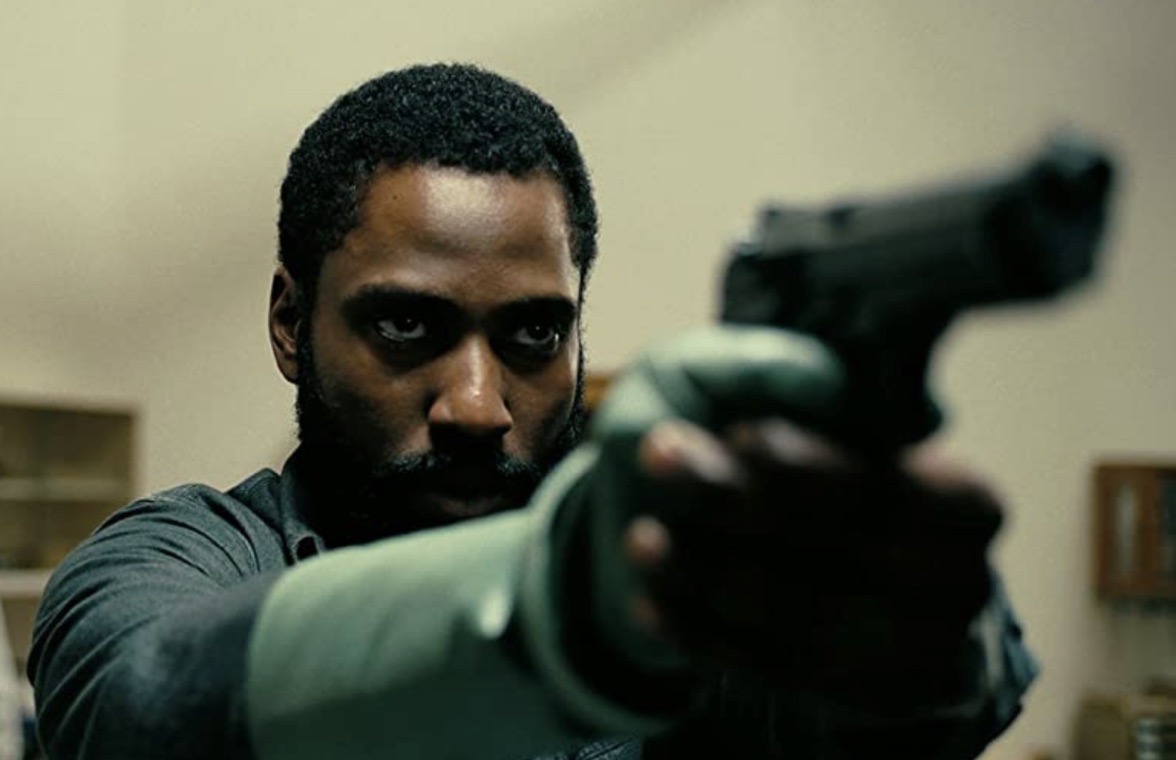
The film has a small but stacked cast – John David Washington stars as a covert operative simply named ‘The Protagonist’, who, after the most intense initiation test involving a fake suicide pill, is sent on a mission to uncover a world-ending threat known as Tenet. With assistance from the physically buff physics buff Neil (Robert Pattinson), The Protagonist attempts to dismantle this threat masterminded by the effortlessly intimidating Andrei Sator (Kenneth Branagh), as well as save his wife Kat (Elizabeth Debicki) from his evil clutches. Sounds simple, right?
On its surface, it kind of is. Nolan’s approach to Tenet is both simple and utterly overstuffed at the same time. Characters are stripped down to their essentials – the main character’s only name is literally his function in the script. The villain has a real ‘evil for evil’s sake ’energy, which maintains a constant good guys vs bad guy momentum. Character motivations are delivered to the audience when prompted, with goals that are often repeated and summarised in one sentence. However, add the fact that the characters, clues and even the fights are moving backwards through time, and it all gets a bit messy.
Now that the film has had a few years to breathe, I feel like I can see Nolan’s vision – he lays out two different ways of enjoying this film. There’s the switched-off brain method, where you can let the physics completely wash over you, and you bask in the beautifully choreographed action. There’s a scientist character in the film that literally exists to offer this idea to audiences – they briefly show off the core time-inversion gimmick, and then tells The Protagonist: “Don’t try to understand it. Feel it”. They may as well be looking directly into the camera and telling you that it’s fine to be confused and to enjoy the ride.
Then there’s the fully-engaged method. Nolan leaves enough breadcrumbs and exposition to fully piece this puzzle together – it just involves turning your subtitles on and really engaging your brain for the runtime. I think this dichotomy is what alienates a lot of viewers – with Inception or Interstellar, Nolan excelled at balancing popcorn-event cinema with epic sci-fi ideas. With Tenet, it doesn’t do either perfectly – if you turn your brain off, the action is more soulless, and if you engage too hard, the film starts to feel more like a thought exercise than cinema.
Despite this, I still really like this film. This film fulfils the Nolan promise of complete dedication to execution. The set pieces on display are grounded by Nolan’s standards, in that they don’t take place in space or in Gotham, but they’re still elevated and epic by all proportions. There is an airport heist sequence that involved crashing a real plane into a building, a car chase sequence that you experience both forwards and backwards in time, and a full-on army assault in the third act involving more time-inversion highjinks. Tenet also boasts Nolan’s best action since The Dark Knight. Fights are so well choreographed, and all of the actors, particularly John David Washington, commit to the action with intense performances. This, combined with sleek cinematography and razor-sharp editing, makes for awe-inspiring and easy-to-track action.
This film is often cited as one of Nolan’s most emotionally distant, which is spot on. There really isn’t much insight into the characters other than the villain, which leads to a less emotionally rich experience. However, I do think there is enough to latch on to – Kat’s journey in this film has nothing to do with saving the world but merely saving herself and her son from Sator, which completes in an emotionally gratifying way. I also like to consider that the little depth into The Protagonist does enhance his character as a leading man – we learn his character through his actions and sheer competency as a hero.
Now, for my hottest take on the film, I mostly enjoy the suffocating sound design of this film. Shock horror, I know. This film is infamous for having a bad case of poor dialogue mixing – there are so many expositional scenes that take place in loud environments, which makes it hard to fully understand the dialogue. As much as this is a valid complaint, I think it is slightly overblown. Aside from a couple of instances, I think the low-dialogue mix is an artistic choice that effectively enhances the visceral nature of the film. There are moments where the dialogue is intentionally faded out, and the synth-heavy music takes over, showcasing that the characters aren’t paying attention to what is being said, and the music or visuals are doing the storytelling over the dialogue.
On the subject of the score, this film marks Nolan’s departure from frequent collaborator Hans Zimmer and the start of a new collaborative relationship with Ludwig Göransson. I appreciate that Göransson doesn’t try to be a diet-Zimmer, but opts for a nail-biting score that effectively mirrors the intense action. The score almost entirely uses electronics as its palette, with a larger focus on texture and impact over melody or harmony. The percussion is often hugely distorted, and the synths are atonal and harsh at times – further adding to the challenging nature of this film. For me, the score is a treat – if you’re a fan of industrial-leaning electronic music like myself, you’ll be pretty pleased. The TRUCKS IN PLACE track and sequence is one of my favourite Nolan moments, period – the siren-like synths emphasise the pure chaos of the action so well.
In conclusion, I think Tenet is an overlooked and over-hated gem. I wouldn’t blame anyone for not jelling with it because they don’t want to work to enjoy a film, but I always have a blast piecing this together. Despite its emotionally distant characters, intentionally frustrating mix and confusing plot, the sleekness and coolness of what Nolan pulls off wins me over every time.

Author: Elliot, Holborn Store