




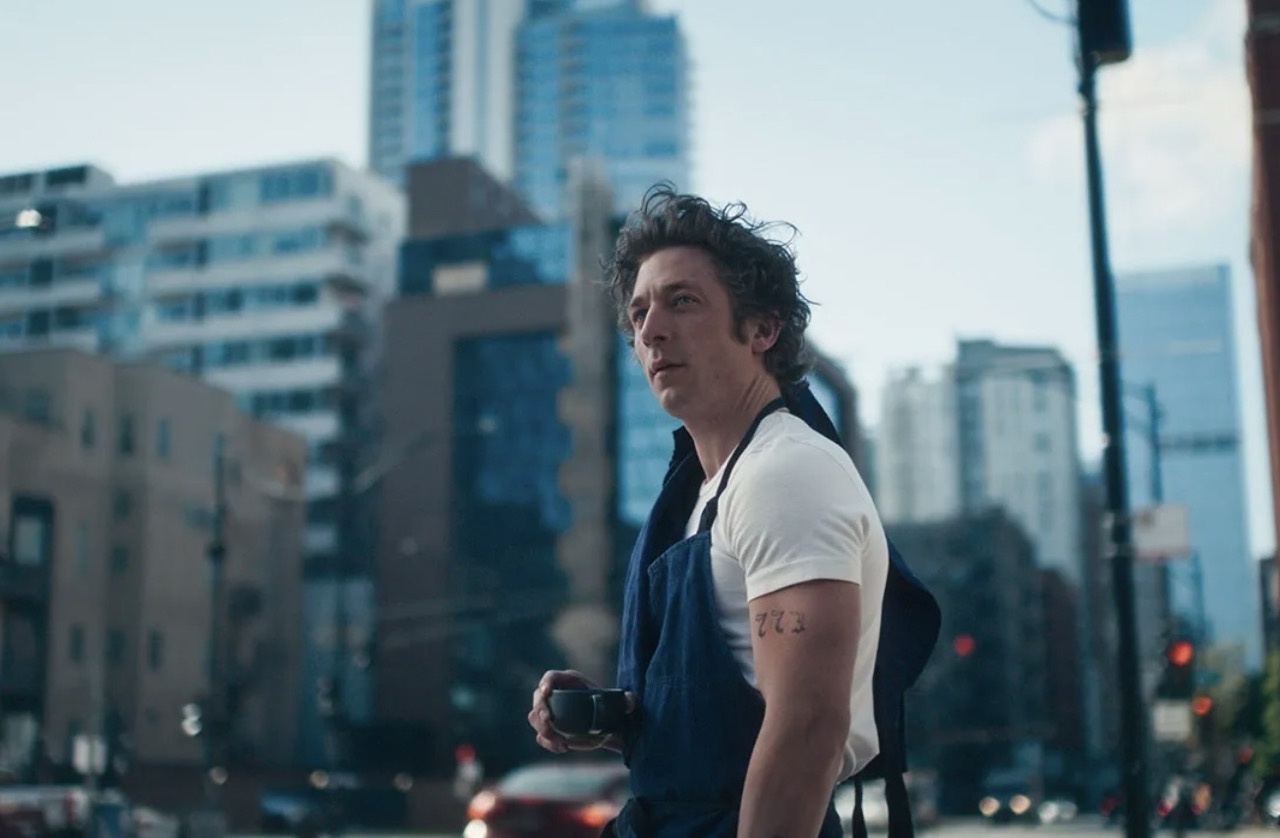
I have really loved the production cycle of The Bear – a season has been released each year since its debut in the summer of 2022. Each season normally zooms by you – 8-10 episodes, roughly 30-minute episodes of anxiety-inducing TV. This regularity was admirable in the streaming age, where production cycles of prestige TV (looking at you Severance and Pluribus) kill momentum. This show has specifically excelled at momentum since its debut – the release schedule, perfectly concise episode length, frantic editing and manic performances all contribute to a feeling of lightning-in-a-bottle progression. This has resulted in a very gratifying watch, exemplified by its final season.
The Bear follows Carmy Berzatto (Jeremy Allen White), a celebrated fine-dining chef who comes home to Chicago to take over his late brother Michael’s failing sandwich shop, ‘The Original Beef’, after Michael’s suicide. Over the previous four seasons, Carmy has transformed the place into an ambitious fine-dining restaurant called ‘The Bear’, alongside sous chef Sydney (Ayo Edebiri) and manager/family friend Richie (Ebon Moss-Bachrach), while wrestling with grief, toxic kitchen habits learned from his old high-pressure jobs, and a chaotic extended family (including his volatile mother and a rotating cast of staff).
Season 5 picks up the morning after the season 4 finale – the team learn Carmy has quit the industry and left the restaurant to them. With no money, scraps of food and a torrential storm, the new partners must band together for one last service, hoping to finally land a Michelin star. Much of the season plays out in real time over a single, apocalyptic shift – pipes burst, the basement floods, and the literal storm outside mirrors the tension inside the kitchen.
Overall this conclusive season was masterful – it leans on familiar crutches but balances the restaurant setting intensity of its first season, with the latter season’s character-driven finesse. Much like my earlier praise of the show’s speedy production cycle mirroring the feeling of progression in the plot, this season employs reduction as a philosophy for success in its presentation and story. The season, much like the kitchen itself, is stripped back and concentrated. A key repeated phrase throughout the whole show is ‘every second counts’, which is also true of this season – every small victory or small discussion amongst characters is either emotionally poignant, plot-progressing, or simply hilarious. After a few seasons and entire episodes dedicated to developing the show’s sprawling (and insanely well-cast) ensemble, the emphasis on small victories over huge stakes is more intimate, realistic and impactful. This does mean that fewer high emotional peaks match the likes of previous seasons (Forks and Fishes will go down in TV history), but I saw this as a necessary trade-off for a more focused conclusion.
Not that I had doubt, but The Bear manages to buck the trend of character assassination in its latter seasons. Instead, this final season effectively uses the growth of previous seasons to complete its journey. The most obvious case of this would be Carmy. His decision to leave the industry at the end of season 4 felt alien at first – a more surface-level writer would have had him persevere through his external and internal pain to become a celebrated chef. However, this more mature approach to wellness and personal growth by taking a step back to reassess is an effective showcase of breaking traumatic patterns. Syd stepping up as head chef was excellent, and Ayo Edebiri’s performance was so effective at showcasing the joy in the process rather than the glory or success. Syd’s more measured and optimistic approach through a nightmare shift unfolded wonderfully, though without shying away from the harsh reality of the restaurant industry.
The whole ensemble cast completely crushed. Ebon Moss-Bachrach as Ritchie was a personal favourite, as always; Lisa Colón Zayas got more opportunities to shine as Chef de Cuisine Tina; Lionel Boyce as dessert chef Marcus balances his career growth with familial expectations; and Abby Elliott as Natalie remains the grounded heart of the team. Truly there were no weak links, and the season balanced showcasing each character excellently.
Visually The Bear has always been top-notch, and this season is no different, with some notable changes. Gone are the frantic close-ups that emphasise claustrophobia – this time things are shot with anamorphic lenses, which offer super-wide imagery. This adds a really sleek look – combined with the signature over-saturated colour – and allows for a more collaborative, less aggressive feel. The editing and sound design still add to the tension. Still, this wider lens mirrors the more collaborative kitchen dynamics with Syd taking the reins, over Carmy’s loud and abrasive approach.
In conclusion, The Bear’s fifth and final season is a triumph in the best and simplest way – it utilises four seasons’ worth of character development to add weight and stakes to a focused and lean plot, that satisfies its characters and audience. This season, and in turn the show at large has a lot to say about finding joy in a punishing world, breaking unhealthy patterns, and helping yourself so that you can help others – I’ve found it one of the funniest and most inspirational TV shows of this decade so far.

Author: Elliot, Holborn Store