



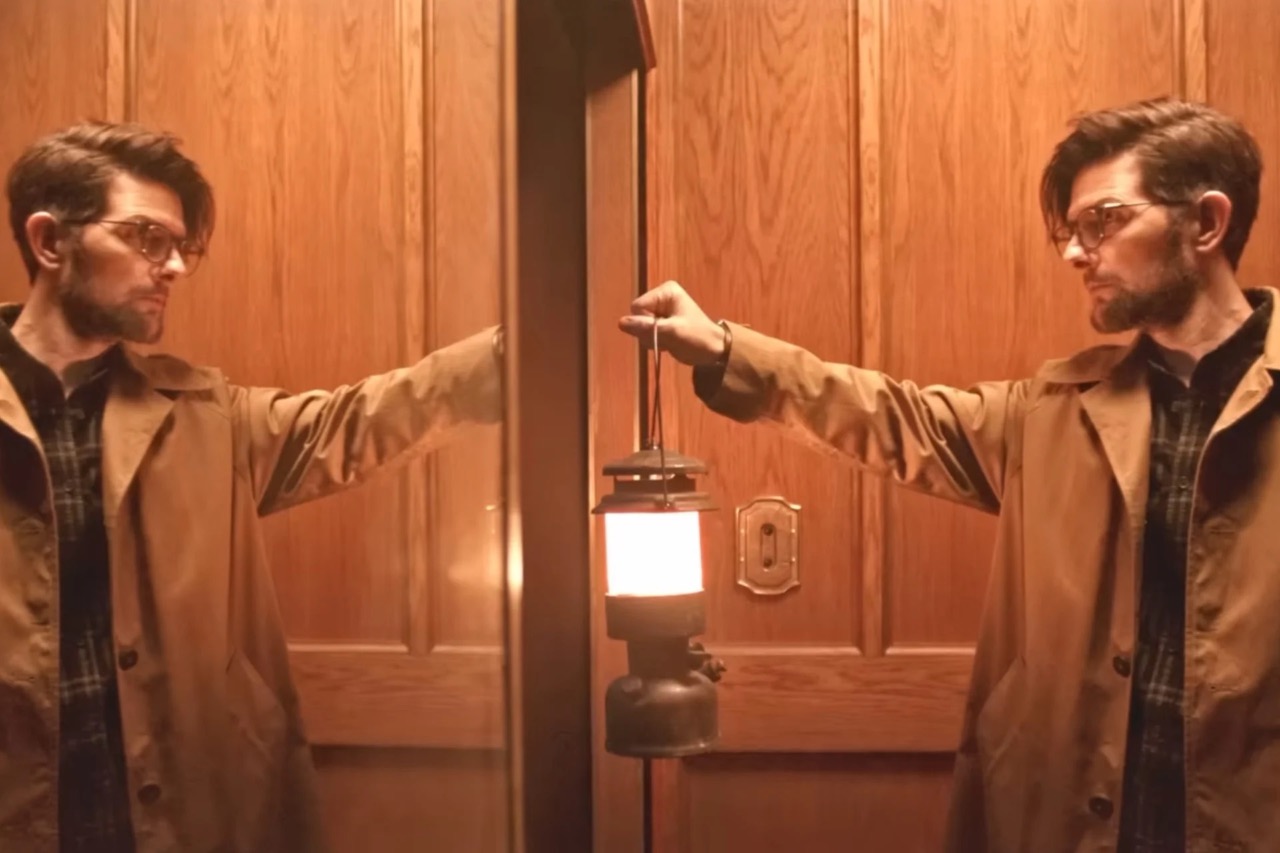
Part dark comedy, part folktale, and part psychological horror, Hokum was a thrill ride of scares and surprises. Directed by Damian McCarthy and starring seasoned curmudgeon Adam Scott, this film was a treat in eerie atmospherics and eye-covering tension.
Hokum marks McCarthy’s third feature-length horror; his previous works, Caveat (2020) and Oddity (2023), were praised for effective slow-burn suspense and atmospheric horror deeply rooted in Irish settings and lore. Hokum is a natural continuation on all of these fronts, and an excellent refining of his previous works.
The film is set in an eerie hotel in rural Ireland, where the staff and local oddballs warn the main character, Ohm Bauman (Adam Scott), about the hotel’s supernatural history. Ohm, a lonely and grouchy writer, has travelled to the hotel to make peace with his parents ’passing, who had previously vacationed at the same hotel for their honeymoon. After a sudden, tragic turn of events, Ohm finds himself investigating the same honeymoon suite, which all staff warn is deeply haunted by a witchy presence.
The film interweaves a more grounded, eerie plot with it’s exploration of the supernatural – both were well executed. For the human side of things, I got a lot of joy watching Ohm butt heads with the Irish locals. Each member of the hotel staff is presented as if they were in a murder mystery novel. They have intertwined relationships, stakes in the hotel, and unique, funny personalities. At times, it felt like a cross between an Agatha Christie novel and an episode of Father Ted – there was a lot of comedic confidence in the filmmaking and performances, which often had me laughing out loud.
However, the supernatural side of the plot is where this film really soars. After the initial setup, a fair chunk of the film plays out like a Resident Evil-style atmospheric haunted-house story. Ohm spends considerable time trapped in the haunted honeymoon suite, which taunts him with ghostly visits and psychological visions of his past. The set design here is immaculately creepy and so well realised that it almost feels like a character in itself. Props too to the lighting and editing – over half of this film is in dingy darkness, but was always clear enough for detail, and to witness Adam Scott’s incredible shocked-face acting.
Adam Scott plays a fantastic grump in Hokum. The plot gives us just enough insight early on to recognise that he has inner turmoil to explain his stubbornness, and eventually peels back the layers when he’s knee-deep in terror. His deeply stoic nature is excellently contrasted by the amiable local characters. This is best explored with the forest-dwelling oddball Jerry, played by David Wilmot, who brings so much heart to the film with an inscrutably zany performance.
The scares are excellent for the most part. The film does have some cheap jump scares, which, due to some lacklustre editing and lack of build-up, I didn’t find particularly effective. However, these are in the minority, as the film relies more on slower, gradual scares. The horror imagery on display was, unfortunately for my sleep, very effective. Beady eyes in darkness, close-ups of eerie cherubs, rotting corpses in animal costumes – truly nightmarish stuff. One scene involving a demonic donkey on a TV screen had me genuinely covering my eyes.
As much as this one scene scared the socks off me, I also felt it was a big missed opportunity. The character never returns, and the film ploughs on. I feel as if some tightening of the ideas thrown at you would have made for a more cohesive and dramatically tight experience. The film balances a lot of ideas – to its credit and detriment.
Overall, Hokum is a brilliant watch and likely to be one of the year’s best in horror. Versatile performances, unique imagery and fantastic set design really bring this together to spook you silly. Whilst I would have preferred a stronger focus on the supernatural over the human plot, and a few lacklustre jump scares are dotted about, this is a must-watch for any fans of horror, folklore, or good Irish comedy.

Author: Elliot, Holborn Store