



Mini LED TVs Explained: The Best Models for Your Home
If you’re searching for a TV that delivers dazzling brightness and cinema-grade contrast, you’ve likely heard the buzz surrounding Mini LED. It’s the technology winning over TV fans for a simple reason: it gets remarkably close to the inky blacks of OLED while hitting peak brightness levels that other screens simply can’t reach.
Our experts have broken down exactly what this tech does, how it stacks up against other types of TV, and our specific recommendations for the best Mini LED TV models you can buy today.
What is a Mini LED TV?
Think of Mini LED as a turbo-charged evolution of traditional LED technology, specifically designed to master Full Array Local Dimming (FALD).
While standard LED TVs rely on dozens of relatively large lights to illuminate the screen, Mini LED replaces these with thousands of microscopic diodes – often measuring just 100 to 200 micrometres, smaller than a grain of sand. This allows for a vastly higher light density, increasing the number of dimming zones from a few dozen in standard TVs to over 5,000 in premium models.
This surgical precision allows specific zones to turn off completely for near-perfect blacks, where others hit over 2,000 nits, virtually eliminating the distracting ‘blooming’ halo effect you used to see around bright objects on dark backgrounds.
Mini LED offers black levels that are intensely deep and contrast that is truly exceptional. While it doesn’t match the pure black of OLED, you gain spectacular High Dynamic Range (HDR) brightness that ensures movies and sports are stunningly lifelike.
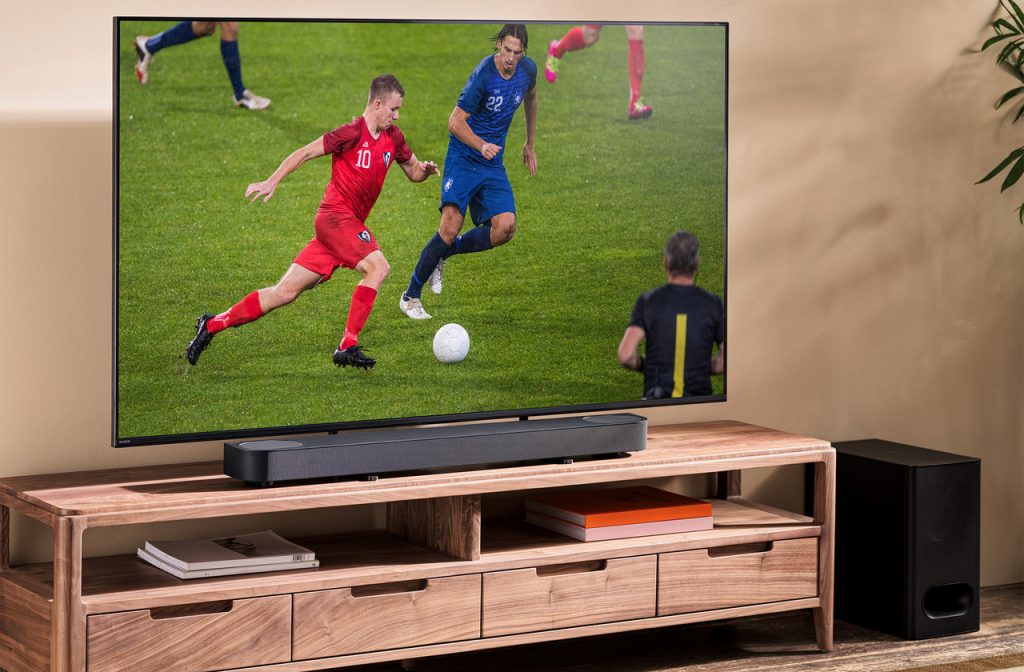
Sony BRAVIA 5 K65XR55B
The Leading Features
It’s not just about the backlight; it’s about how that technology improves your everyday viewing. Here are the standout features that make Mini LED a top-tier choice for UK homes.
Daytime Viewing Dominance
Mini LED TVs can hit incredibly high peak brightness (often exceeding 2,000 nits). If your living room gets a lot of sun, a Mini LED screen cuts through reflections effortlessly, ensuring you don’t need to close the curtains just to watch the football.
Worry-Free Longevity
Unlike OLEDs, which use organic materials that can degrade, Mini LED TVs use inorganic LEDs. This makes them immune to “burn-in” (permanent image retention). You can leave news channels on all day or play games with static HUDs for hours without worrying about damaging the screen.
Next-Gen Gaming Ready
Most premium Mini LED models come packed with serious gaming tech. We’re talking 144Hz refresh rates and Variable Refresh Rate (VRR) support. Combined with that high brightness, HDR games look punchy, vibrant, and incredibly smooth.
To see which screens are currently topping the leaderboards, check out our Best Gaming TVs Guide.
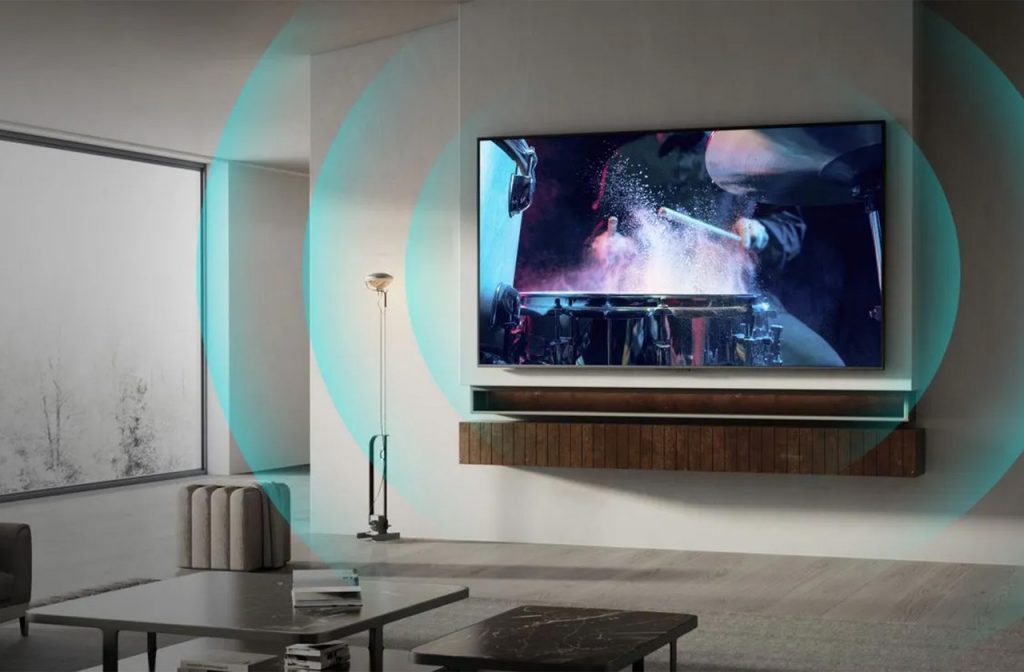
Hisense 75U7QTUK
Cinematic HDR Impact
Movies are mastered to have bright highlights like a torch beam in a dark cave. Mini LED has the raw power to make these highlights sparkle intensely without washing out the dark cave walls around them, giving you a true home cinema feel.
Mini LED vs. The Rest
When hunting for the best Mini LED TV, it helps to know where it sits in the landscape.
- VS. QLED: QLED uses a “Quantum Dot” layer for vibrant colours, but standard QLEDs still use older backlights. Mini LED is the backlight. The best TVs now combine both (like Samsung’s Neo QLED and LG QNED evo) for the ultimate colour and brightness combo.
- VS. OLED: OLED is famous for “perfect” blacks because each pixel lights itself. However, OLEDs can sometimes struggle in very bright, sun-drenched rooms. Mini LED bridges this gap – it offers near-OLED contrast but with significantly higher brightness that cuts through reflections.
Our Round Up of the Best Mini LED TVs
We don’t just read the spec sheets; we test these TVs to see how they perform in real living rooms. Here are the fresh, cutting-edge models our expert team rates.
The Brightness Master: Samsung QN90F Neo QLED
If you want the brightest Mini LED TV experience, Samsung’s 2025 “F” series, such as the QN90F model, is the current benchmark to beat. These models are powered by the new NQ4 AI Gen3 Processor, which uses 128 neural networks to upscale HD content to near-4K perfection. What really stands out to our team is the improved anti-reflection screen; if you have a bright living room with south-facing windows, this TV cuts through glare effortlessly, ensuring you don’t lose the detail in dark movie scenes just because the sun is out.
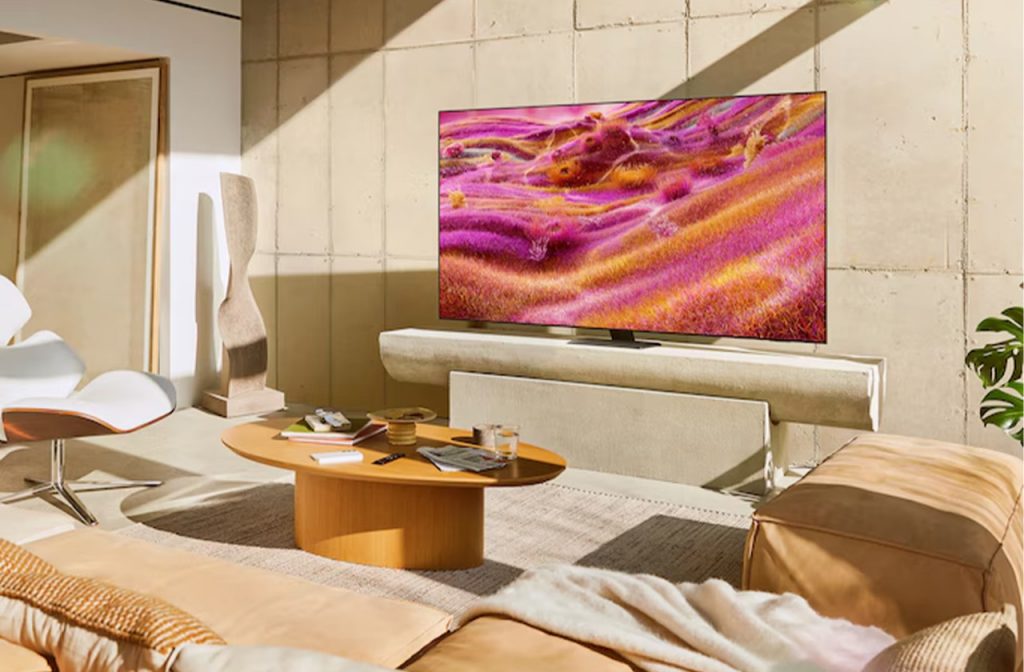
Samsung QE85Q90F
Our Experts’ Favourite Feature: The refined “Glare-Free” technology ensures deep, inky blacks remain visible even in the brightest light.
The Smart Performance Choice: Hisense U8QTUK
The Hisense U8QTUK continues to shake up the market by putting premium Mini LED panels into a competitive package. It’s a genuine powerhouse for gamers, featuring 165Hz Game Mode Pro for incredibly smooth, responsive motion on next-gen consoles and PCs. The picture quality is equally impressive, delivering punchy brightness hitting peak figures of 5,000 nits, for medium-sized screens, alongside deep, immersive blacks.
Our Experts’ Favourite Feature: The updated Hi-View Engine PRO uses deep-learning AI to fine-tune each frame in real-time, ensuring fast-moving sports and action movies look crisp, lifelike, and jitter-free. The advanced anti-reflection screen tech is another favourite feature, which is a game-changer for daytime viewing, letting you focus on the action, not the glare.
The All-Rounder: LG QNED93A
LG is famous for OLED, but their latest “QNED” evo range (Quantum Nano-Emitting Diode) is a fantastic alternative if you worry about burn-in or watch a lot of static news channels. The QNED93A combines Quantum Dot and NanoCell technologies, alongside Mini LED backlighting, to produce exceptional colour purity. It runs on the latest webOS platform, which we find to be one of the most intuitive Smart TV systems available, making it easy to jump between Netflix, Disney+, and live TV with very little any lag.
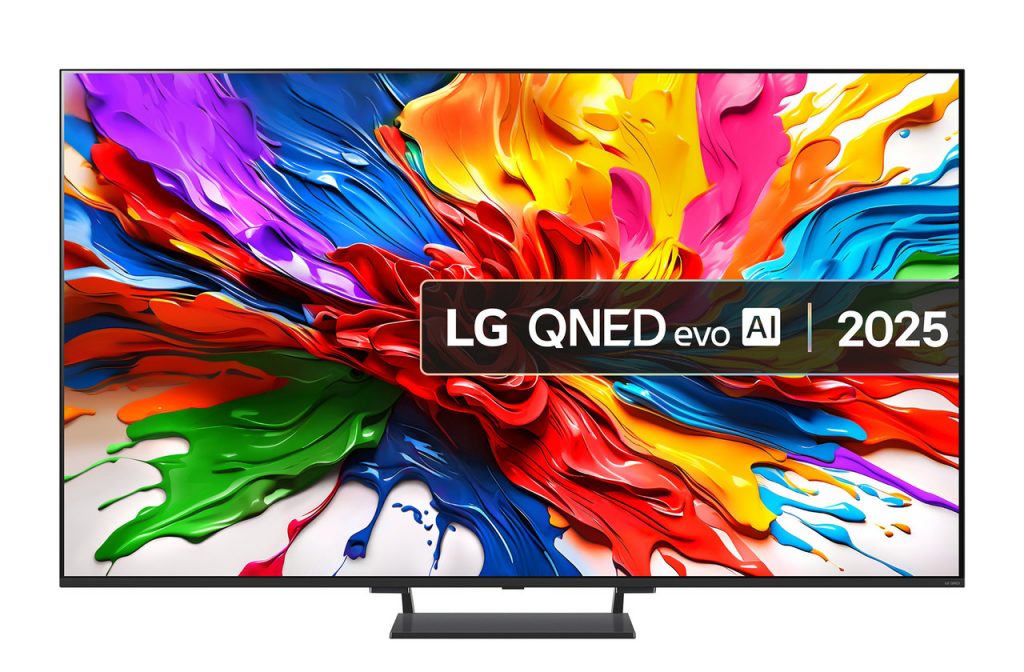
LG 55QNED93A6A
Our Experts’ Favourite Feature: Precision Dimming Pro technology controls the backlight blocks individually to create sharper images and minimise the “grey” haze often seen in dark scenes on standard LED TVs.
A Note on Panasonic
While famous for its OLEDs, the new Panasonic W95B is a dark horse worth considering. It tunes its HCX Pro AI MKII processor with input from Hollywood colourists, ensuring that colour accuracy is absolutely spot-on right out of the box. Unlike many other brands, it supports both Dolby Vision and HDR10+ Adaptive, meaning you get the best possible HDR performance regardless of which streaming service you use.
Our Experts’ Favourite Feature: The “True Game Mode” ensures colour accuracy and HDR performance are maintained even during intense gaming sessions, a rarity in many game modes.
The Cinematic Masterpiece: Sony BRAVIA 9
Sony has effectively blurred the line between professional mastering monitors and home TVs with the BRAVIA 9. It uses their unique XR Backlight Master Drive to control the thousands of Mini LEDs with frightening precision. In our experience, this virtually eliminates “blooming” – that distracting halo you sometimes see around bright objects on dark backgrounds. It prioritises natural, authentic colour reproduction over artificial boosting, making it the top choice for movie buffs.
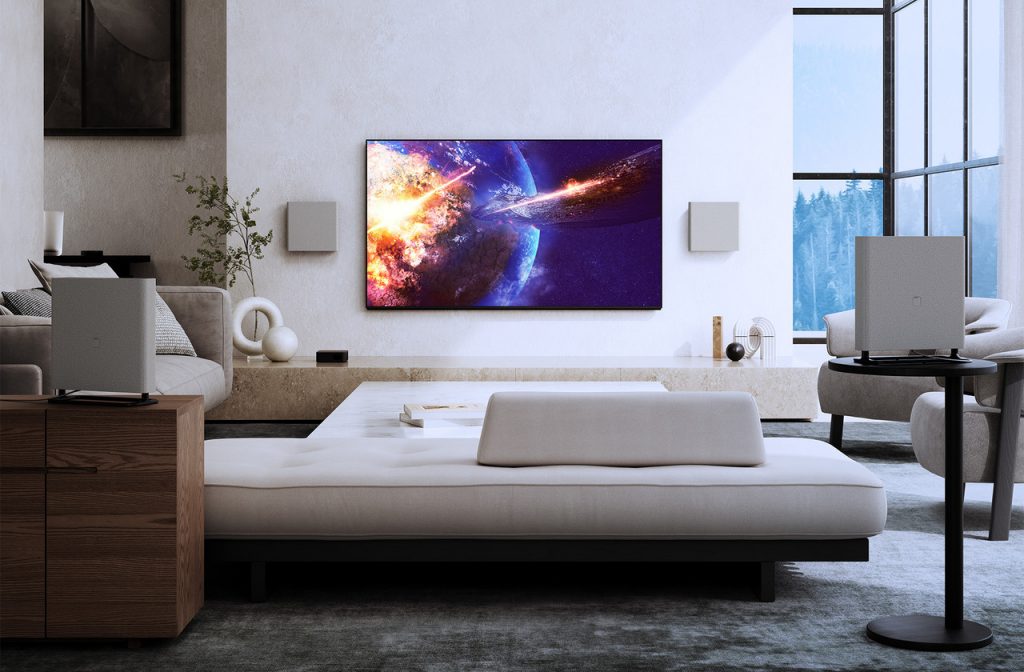
Sony BRAVIA K75XR90PU
Our Experts’ Favourite Feature: The High Peak Luminance technology delivers dazzling brightness for HDR highlights like stars or streetlights without washing out the surrounding shadows.
Still debating QLED, OLED or Mini LED?
TV tech moves fast, and finding the perfect fit for your room can be tricky. Don’t guess – just ask. Our team loves talking tech and can help you weigh up the pros and cons for your specific budget and viewing habits. There’s no pressure – just honest advice from our experts. Find a local Richer Sounds Store near you.