



Outdoor TVs Explained: How to Enjoy Great Picture Quality in Any Weather
There’s nothing quite like the experience of watching the big game or a summer blockbuster alfresco. But simply dragging your indoor set onto the patio isn’t the answer. Standard TVs aren’t built to handle the British weather or the glare of a sunny afternoon.
If you want to create the ultimate garden cinema, you need a screen designed for the job. In this guide, we’ll explain everything you need to know about outdoor TV screens, from weatherproofing to finding the perfect spot.
Outdoor TVs vs. Indoor TVs: What is the Real Difference?
At first glance, a dedicated outdoor set might look like any other modern 4K screen, but the internal engineering is worlds apart. Standard indoor TVs are designed for controlled environments with stable temperature and humidity. If you place a normal TV outside, you face several immediate challenges that a dedicated unit is built to overcome:
Brightness and Glare
A typical living room TV achieves 350-500 nits of brightness (although newer models can surpass the 1,000 mark). In a garden setting, less than 500 nits is simply too dim to compete with daylight, leaving you with a washed-out image. Dedicated outdoor screens reach between 1,000 and 2,000 nits, ensuring a crisp picture even in partial or full sun.
Weatherproofing and Safety
Indoor TVs lack protection for their internal circuits, making them highly susceptible to humidity, condensation, and corrosion. Outdoor-rated televisions feature sealed vents and weatherproofed port entries to prevent water and dust ingress; however, in many cases the remote control is also waterproof. In many cases, the remote control is waterproof, too. Importantly, using an indoor TV outside will almost certainly void your manufacturer’s warranty.
Internal Climate Control
Perhaps the biggest difference is thermal management. Indoor sets rely on passive airflow; outdoor units house internal heaters and cooling fans. This allows them to operate safely in extreme temperatures – often from -30°C to over 50°C – whereas an indoor set could suffer catastrophic failure in a hard frost or a heatwave.
The Engineering of Weatherproofing
A specialist outdoor TV is a sealed system engineered to survive the British weather. The key is the IP (Ingress Protection) rating. For most gardens, IP56 is the top standard: the first ‘5’ ensures dust and grit can’t penetrate the casing, while the second ‘6’ means it can easily handle a heavy downpour or a stray spray from a garden hose. IP56 can actually withstand a jetwash.
Beyond the casing, these units feature internal climate control systems. This specialised engineering prevents isotropic transition – a common failure where standard screens go black when they get too hot. By managing solar load and temperature extremes, these TVs stay reliable all year round, ensuring you experience better for years to come, not just for one summer.
The Battle Against Ambient Light: Nits and Panel Tech
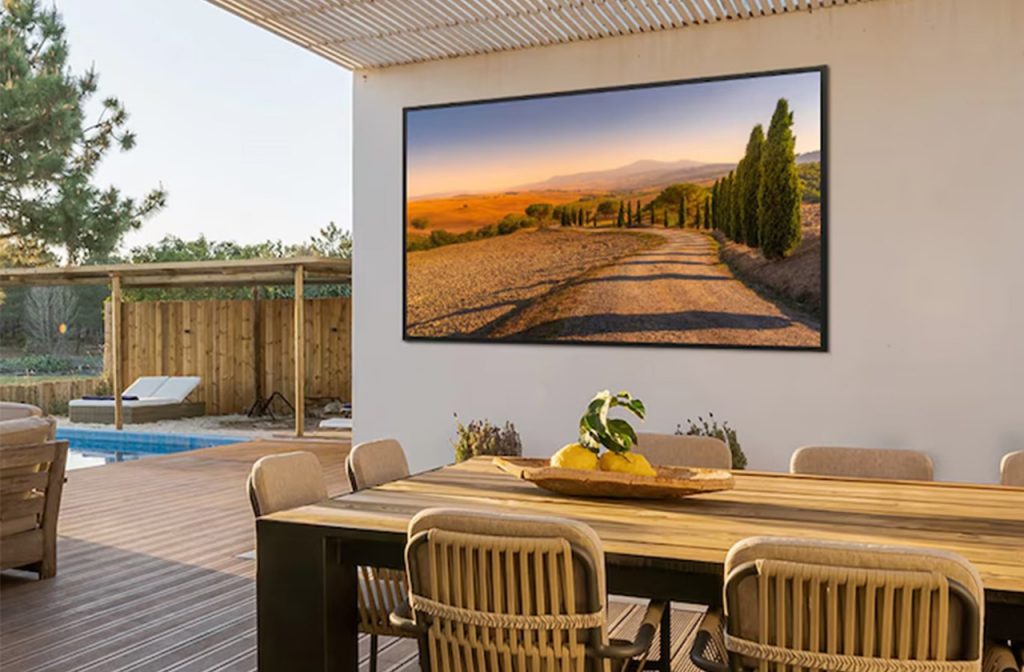
The most significant hurdle for any outdoor TV screen is the sun. For a truly immersive experience, you need high-output panels that utilise advanced technology like Neo QLED displayed in the Samsung The Terrace 65-inch TV. By using Quantum Mini LEDs that are significantly smaller than conventional LEDs, these screens can achieve incredible brightness levels while maintaining the deep blacks and vibrant colours. These screens feature sophisticated anti-reflection layers that scatter incoming light, ensuring that reflections of your patio furniture don’t distract from the action on screen.
Signal Integrity and Outdoor Connectivity
Most outdoor TVs will connect via Wi-Fi or Ethernet cable, but in some instances, customers may want to connect via an aerial or dish. When considering the best outdoor TV aerial, height and shielding are your two priorities. As digital signals are all or nothing, even minor interference from nearby buildings or foliage can lead to a total loss of picture.
For a professional-grade installation, we recommend using high-grade, double-shielded coaxial cabling. Standard indoor cables can degrade quickly when exposed to UV rays and moisture, leading to signal leakage. For longer garden runs, consider using a signal amplifier (booster) near the aerial to maintain signal strength before it travels the length of your garden.
Planning and Protecting Your Investment
Placement is as much a science as it is an aesthetic choice. An outdoor TV screen can handle direct sun; placing it in a north-facing position or under a permanent structure will significantly enhance the perceived contrast and longevity of the panel. Utilising a heavy-duty, powder-coated outdoor stand for TV allows for the necessary articulation to avoid mid-afternoon glare while ensuring the mount itself doesn’t succumb to rust.
Even with a rugged build, we always advise using high-quality TV covers for outdoor TVs when the screen is dormant. This protects the specialist anti-glare coatings from acidic bird droppings and UV degradation over time.
How to Create Your Perfect Outdoor Cinema
Positioning is the foundation of a great setup, but it’s about more than just finding a flat wall. We recommend looking for a spot with natural architectural cover, consider areas such as a sturdy pergola, under a retractable awning or beneath a gazebo. Your TV is built to be rugged; these structures act as a first line of defence against the relentless British wind and rain, while also providing a crucial shadow box effect that naturally enhances the perceived contrast of the picture.
We always suggest observing your garden at various intervals throughout the day before committing to a mounting point. A spot that feels like a cool, shaded oasis at 10 am can quickly become a glare-trap by the late afternoon as the sun dips lower in the sky. If you have a choice, aim for a north-facing wall; this keeps the sun behind the screen rather than shining directly onto it, allowing the anti-glare technology to work at its most efficient.
Our Experts’ Top Picks for You
Choosing the right model depends on your specific garden environment and how you plan to use the space. To help you experience better, our experts have highlighted the key differences between our top-rated ranges.
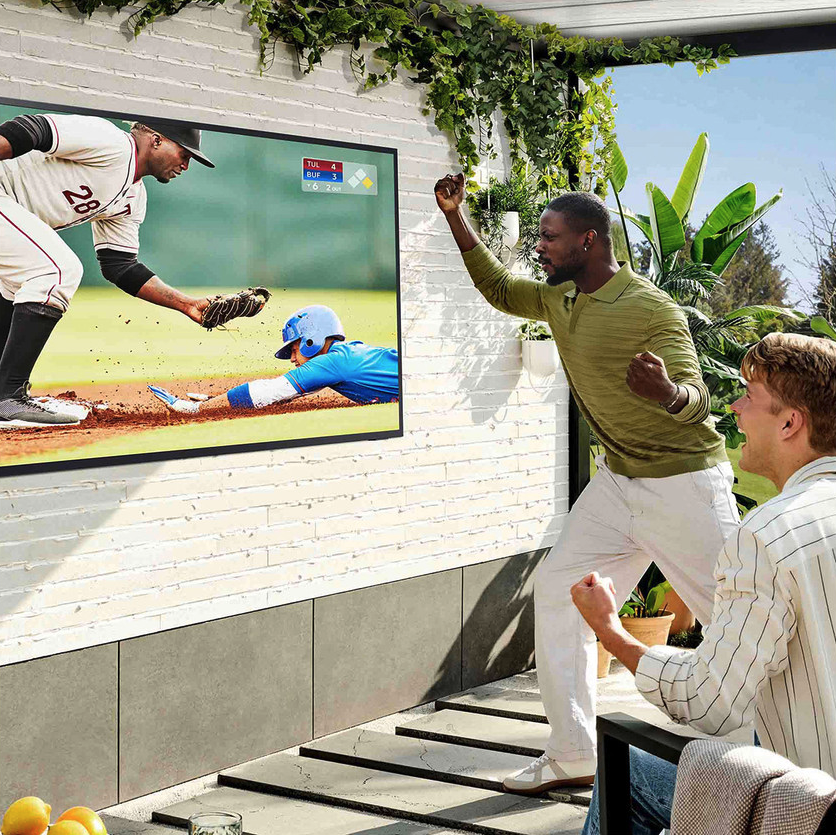
Samsung The Terrace
The Ultimate Brightness Champion
If your patio is south-facing or has little natural shade, the Samsung The Terrace is the pinnacle of outdoor viewing. This series uses Neo QLED technology with Quantum Mini LEDs to achieve brightness levels of up to 2,000 nits, ensuring the picture stays vibrant and visible even in direct midday sun. It also includes a generous 6-year guarantee as standard, providing long-term peace of mind for your investment. This model is perfect for high-action sports and cinematic movies where detail and anti-glare performance are paramount. You can explore the full range in 55″, 65″, and 75″ sizes.
Rugged Engineering for Shaded Spaces
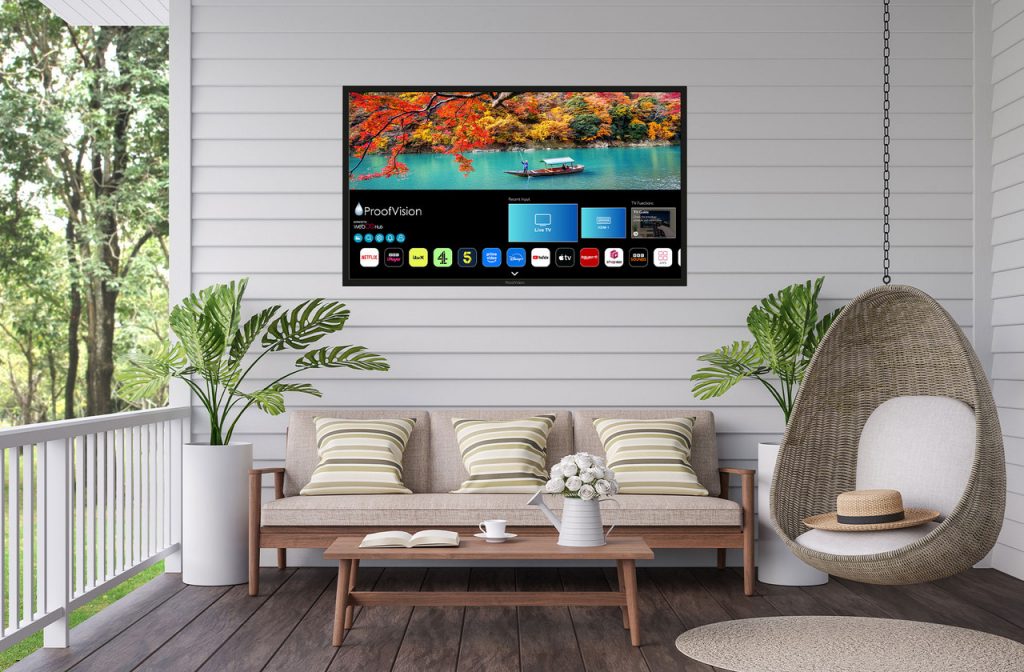
For shaded or semi-shaded British gardens, the 55 inch 55 inch ProofVision Lifestyle MX offers exceptional value without compromising on durability. This range is IP55 rated, meaning it’s specifically designed to withstand everything from fine summer dust to heavy autumn downpours.
It features QD-Mini LED technology to deliver high-end contrast, making it an excellent choice for garden cinema nights as the sun begins to set. If you are looking for a durable, all-weather solution that offers professional-grade reliability, this series is also available in 65″, and 75″.
Ready to Transform Your Garden into an Outdoor Cinema Space?
Choosing the right outdoor TV is a big decision, but you don’t have to make it alone. Whether you’re still weighing up the different nits and IP ratings or you’ve already picked out the perfect spot on your patio, our experts are here to help you get it right first time.
Pop into your local store for a friendly chat or speak to our telesales team for expert advice. We can talk through your garden layout, signal requirements, and audio goals to ensure you have everything you need to experience better this summer.