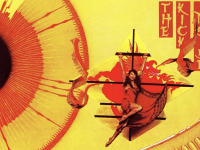




 Six years is a long time between solo albums, particularly after one as beloved as 2020’s Punisher. With Lost Weekend, Phoebe Bridgers returns from a stretch away from the spotlight with a record that widens her sound while keeping her sharpest instincts intact.
Dealing with both the loss of a loved one and the blossoming of new love, this 16-track emotional epic is presented as a collection of unflinchingly personal vignettes that remains as approachable as it is heartbreaking. Bridgers’ mainstream success with Punisher was the result of well-honed indie-songwriter magic. The approach of writing in a hyper-specific diary-entry form to convey a tangible emotional journey has a voyeuristic yet approachable effect – like hearing your friend discuss a heartbreak over a drink.
Add beautifully performed and produced indie-folk laced with lo-fi production quirks, and you’ve got yourself the soundtrack to sadness that has captured the hearts of many. While her music isn’t all doom and gloom, I find Bridgers’ recalled dialogue songwriting some of the prettiest and most interesting music of the past decade. Despite a minimal rollout, Lost Weekend has been one of my most anticipated releases this year, and I can quite confidently champion it as not just one of the best albums this year, but potentially her best album too.
After some anticipatory phone-free shows and an impressive list of guest collaborators was shared, our ears were treated to Lost Boys as the first single. The track was an excellent showcase of the forthcoming album, in that it was reminiscent of previous work, but refined and broadened. With a horn-layered catchy chorus I was immediately reminded of Punisher’s hit Kyoto, yet the track keeps things fresh with touches of vocoder and guest vocals (courtesy of long-time collaborators and bandmates Julien Baker and Lucy Dacus).
The Outside opens the album with more cold vocoded vocals that depict a funeral setting, kicking things off with some trademark emotional frankness. Bridgers adds some levity with the track’s chorus, with her clear hushed vocal cutting through over delicate arpeggiated piano. Bridgers sings that she felt on the outside of these painful moments, watching as a spectator, in order to stay strong. The lyrics depict Bridgers’ development with fame her too, with lyrics depicting fans safely carrying her post-stage dive, conveying that ‘the outside’ could also be Bridgers processing grief through watching her fans reciprocate with her emotional songwriting.
A few tracks down the line, The Governor’s Waltz picks up on fame too. The song captures the feeling of being perceived and lorded at the Governor’s Ball concert event, by both fame and what seems to be an insecure admirer. The track is quietly confident in putting the past behind and finds comfort in shedding internal pressure. After this quiet contemplative track, Bobby soars as one of the album’s few ‘bangers’. The track conveys the feeling of overwhelming love with excellent energy, and the infectious pairing of a mandolin with modulated synths. Bridgers bears her heart to her muse, comedian Bo Burnham, with charming sincerity – it’s awesome to see Bridgers attempt and excel at an honest-to-God love song.
Much of the album deals with the loss of Bridgers’ father, with Still Standing more explicitly dealing with their complicated relationship, also putting the funeral imagery of the opening track into further context. The song asserts their relationship on Bridgers’ terms by exploring the paradoxes of grief and trauma. Never Going Back! is lyrically simple but is a bittersweet reminder of this complicated relationship. Bridgers repeats the same phrase gleefully over blown-out acoustic guitar and drums, sounding like a defiant cry for freedom. However, the song is intercepted with a voicemail from her late father, which grounds the song in guilt about leaving the past behind, as the listener is now aware of his passing. It’s a very ingenious way of showing and not telling via song, allowing the listener to connect the dots themselves.
The final track of the album, Lost Weekend (Reprise) revisits the title track and concludes the emotional narrative surrounding her father. The song, at thus the album to find acceptance in their relationship by revisiting grief through fondness. It’s a wonderful way to not only end the album, but instil the listener with hope, allowing people to piggyback this catharsis in their own lives.
Despite this album being as emotionally dense as it is, the themes and music remain approachable and catchy. A lot of this is credit not just to the songwriting, but to the instrumentals and production. Bridgers brought an Avengers-level team-up in the list of collaborators for this album, which offers a vast instrumental and aesthetic palette as a backdrop for the heavy themes of the album. There are hints of ghostly ambient electronics all over the album, shining particularly on Lost Weekend in its flurrying climax of samples, strings and synth percussion.
Haunted features a more straightforward bluegrass folk palette as an immediate contrast, with driving acoustic rhythms adding grounded energy to the tracklist. The mixing at large is near perfect – my only gripe with Punisher’s hushed and ghostly production was a general muddiness that made some songs feel suffocated. Here, the ghostly quirks only ever enhance the mix, despite being more prevalent and ambitious. As much as I loved listening to this album through my HiFi speakers, I enjoyed the intimate production more through headphone listening – pop over to your local Richer Sounds for a demo of HiFi headphones and headphone amps!
If I had one small gripe, it would be the pacing of the album’s latter half. All 16 tracks are stellar, but with less tonal variation and a slower tempo settling in, the momentum built early on begins to fade, and the back end can feel somewhat repetitive. It’s a minor complaint on a record this strong, and one that doesn’t take away from how well each song stands on its own.
Ultimately, Lost Weekend was well worth the six-year wait. Bridgers grieves and falls in love in the same breath, and makes both feel lived-in rather than performed. Even with a slightly sagging back half, this is an artist refining her craft without losing what made us fall for her in the first place – which makes a compelling case for it being her best work yet.

Author: Elliot, Holborn Store