




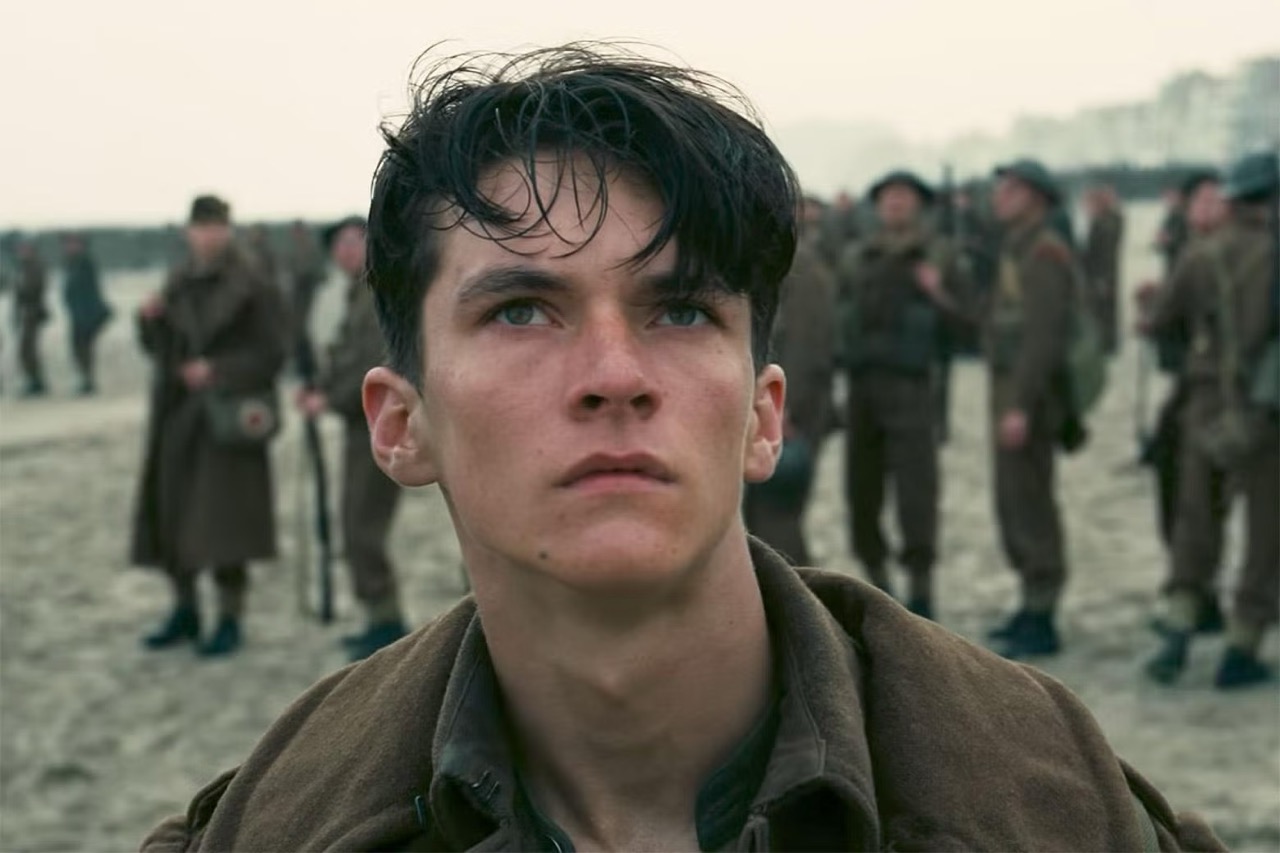
 This year is bringing a new Christopher Nolan film in the shape of The Odyssey. His films don’t come along very often so when they do they deserve attention! It gives us a chance to relive his earlier works such as Dunkirk.
I recently rewatched this film at the BFI IMAX in Southbank London. It’s the biggest cinema In the country and the perfect place to see this film how it was meant to be seen. It has been a while since I have watched it and when I first saw it I came away thinking this is the best film I’ve seen. I found it hard to explain why so maybe on a second viewing I can get some more clarity.
The film is built through three interlinked stories set over 1 hour, 1 day and 1 week. These cover soldiers, civilian sailors and spitfire pilots. The way Nolan weaves these stories together is subtle but very intentional. Each story has its own heart and nothing feels wasted. Each has its titular characters from so very high profile actors and some surprises (Who would have thought Harry Styles would work in a film like this). Nolan has a select few actors that he likes to use and each have their own pull to the story. Tom Hardy goes from the brute of Bane in The Dark Knight to a heroic fighter pilot. Nolan brings the most out of his actors and this can be seen very clearly in this film. Cillian Murphy is another stand out – although his role is smaller by comparison his depiction of PTSD and fear shows range like not many of his other films have done.
War films are a delicate balance to get right, either directors go for shock and awe as with Saving Private Ryan or some like Dunkirk go another direction. Dunkirk is a unique film in this genre, it is one that has very little in the way of graphic violence. The way this film deals with this is through tension. The musical score from the legendary Hans Zimmer builds and builds throughout the film, rarely giving you a chance to catch your breath. The ticking of clocks and the increasing in tempo in certain scenes give a big impact. You couple the score with excellent sound design specifically the wail of the Stuka dive-bomber that adds so much fear to the characters you yourself get scared for them! It is a film to be heard loud as if you can’t have dismembering you can still have shock and awe through audio. The first scene is a notable example of this when peace and quiet is abruptly ended – to this day I still jump.
The visuals of this film are for me what set it apart. The cinematography is stunning, real locations and the heavy use of IMAX out this film amongst the very best. Seeing this in the biggest cinema in the UK really shows the benefit of IMAX. Watching a spitfire fly over the sea in almost 1:1 scale gives you a sense of scale a lot of films struggle with. These shots are not easy but with dedication and commitment they can be pulled off! One of the highlights as with a lot of Nolan films is the use of real locations and real sets. The majority of the film was actually shot on location in Dunkirk on the beach where the evacuation actually happened. This not only grounds the film in a reality that we can all relate to but doesn’t age the film. The film is approaching 10 years old and it could easily have come out yesterday. The same thing can be said for a lot of Nolan’s works.
Rewatching this film has reaffirmed it as one of my favourites and rewatching it properly oj the biggest screen has only made me want to go and see more of in films this scale. The way it uses music and the scale of cinematography really makes it an emotional and powerful film. The characters and their stories give further weight to the story and helps to build an emotional connection. They all have their own struggle and the culmination of each storyline leaves a profound effect on the viewer. This film deserves to be revisited especially in IMAX at the biggest screen you can find as it is a masterpiece in filmmaking that is often overlooked.

Author: Tom, Bath Store



Great piece. Dunkirk really is the kind of film that shows how much sound, tension, and scale can do without needing to over-explain everything.